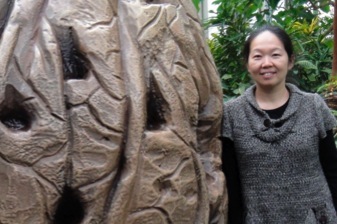
Chau-Ti Ting

My research has motivated by the genetic and morphological diversity of the living creatures. In the past few years, our group has been focusing on understanding the genetics basis of species difference using Drosophila species as model organisms. With the advent of new molecular genetic and genomics tools, we have characterized the phenotype of hybrid male sterility mutants and demonstrated how the protein evolution contributes to fitness differences. Publications contributed by our group suggest that positive Darwinian selection after gene duplication is the major driving force shaping the diversification of sex-specific traits and speciation. Our current research project is being done to investigate the whole transcriptome profiling that unveils the expression differences between autosomal and X-linked loci. The results show the molecular basis of Haldane’s rule, a fundamental principle of speciation genetics. Currently, we continue on exploring genetics and genomic tools to characterize the genetic components manifest the sexual characters involving in mating behavior. The ultimate goal is to uncover the underlying genetics of mate recognition and speciation.
Current Projects
Genetic dissection of hybrid incompatibility in Drosophila
Population genomics of sibling species of Drosophila simulans
Transcriptome profiling of two behavioral races of Drosophila melanogaster
Genetic analyses of sex ratio distortion in Drosophila
Publications
Lu, X., J. A. Shapiro, C.-T. Ting, Y. Li, C. Li et al. 2010. Genome-wide misexpression of X-linked versus autosomal genes associated with hybrid male sterility. Genome Res. 20:1097-1102.
Fang, S., C.-T. Ting, C. R. Lee, K. H. Chu, C. C. Wang, and S. C. Tsaur. 2009. Molecular evolution and functional diversification of fatty acid desaturases after recurrent gene duplication in Drosophila. Mol. Biol. Evol. 26:1447-1456.
Ting, C.-T.*, S. C. Tsaur, S. Sun, W. E. Browne, N. H. Patel, Y.-C. Chen and C.-I Wu. 2004 Gene duplication and speciation in Drosophila – Evidence from the Odysseus locus. Proc. Natl. Acad. Sci. USA 101: 12232-12235.
Sun, S., C.-T. Ting, and C.-I. Wu. 2004 On the normal function of a speciation gene, Odysseus, and its hybrid sterility effect. Science 305: 81-83.
Wu, C.-I and C.-T. Ting. 2004 Genes and Speciation. Nat. Rev. Genetics 5:114-122.
Takahashi, A. and C.-T. Ting. 2004. Genetic basis of sexual isolation in Drosophila melanogaster. Genetica 120:273-284.
Ting C. -T., A. Takahashi, and C.-I Wu. 2001. Incipient speciation by sexual isolation in Drosophila: Concurrent evolution at multiple loci. Proc. Natl. Acad. Sci. USA 98: 6709-6713.
Tsaur, S. C., C. -T. Ting, and C.-I Wu. 2001. Sex in Drosophila mauritiana: Very high level of amino acid polymorphism in a male reproductive protein gene, Acp26Aa. Mol. Biol. Evol. 18:22-26.
Ting, C.-T., S. C. Tsaur, and C.-I Wu. 2000. The phylogeny of closely related species as revealed by the genealogy of a speciation gene, Odysseus. Proc. Natl. Acad. Sci. USA 97:5313-5316.
Ting, C.-T., S. C. Tsaur, M.-L. Wu and C.-I Wu. 1998. A rapidly evolving homeobox at the site of a hybrid sterility gene. Science 282:1501-1504.
Tsaur, S. C., C.-T. Ting and C. -I Wu. 1998. Positive selection driving the evolution of a gene of male reproduction, Acp26Aa of Drosophila: II. Divergence vs. polymorphism. Mol. Biol. Evol. 15:1040-1046.
Hollocher, H., C.-T. Ting, M.-L Wu, and C. -I Wu. 1997. Incipient speciation by sexual isolation in Drosophila melanogaster: extensive genetic divergence without reinforcement. Genetics 147:1191-1201.
Hollocher, H., C.-T. Ting, F. Pollack, and C. -I Wu. 1997. Incipient speciation by sexual isolation in Drosophila melanogaster: variation in mating preference and correlation between sexes. Evolution 51(4):1175-1181.
Chang, H., C.-T. Ting, and F. J. Lin. 1994. On the low genetic variability in Drosophila immigrans and D. formosana. Zoological Studies 33(4):278-286.
Research Interests
Associate Professor
Department of Life Science
Institute of Ecology and Evolutionary Biology
Institute of Zoology
National Taiwan University
1103 Life Science Building
Office: +886 2 3366 2522
E-mail: ctting_at_ntu.edu.tw
Last update on March 20, 2011